
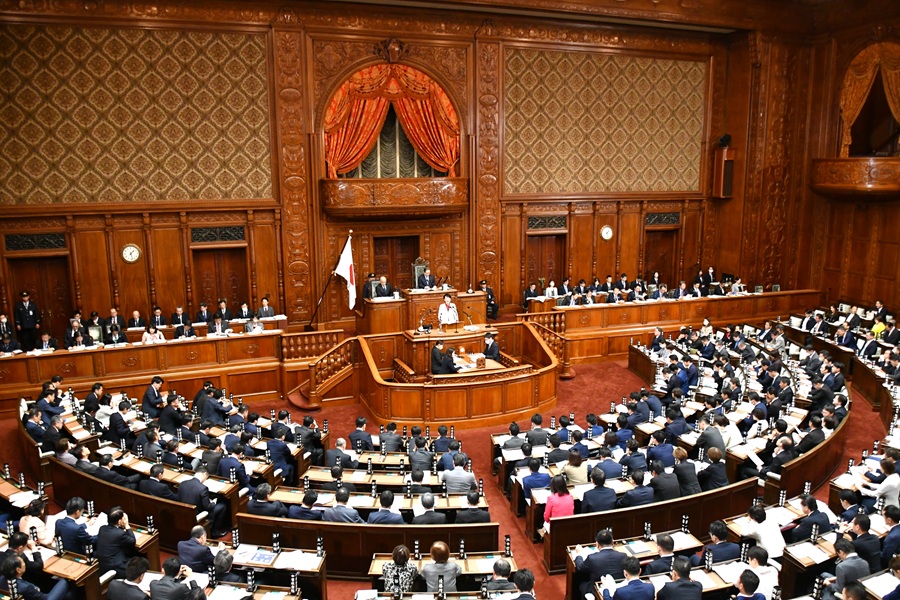
Tokyo (Japan). Sanae Takaichi was elected as Japan’s first female prime minister on October 21, 2025. She was chosen by the National Diet, marking a historic moment in Japan’s political history. Takaichi received 237 votes in the Lower House and 125 votes in the Upper House. Her victory ended decades of male-only leadership in Japan. The Liberal Democratic Party (LDP), led by Takaichi, secured the top office after she defeated several prominent male rivals, including Shinjirō Koizumi.
Coalition and Challenges for Japan’s First Female Prime Minister
Japan’s First Female Prime Minister Takaichi’s government was formed as a minority coalition with the Japan Innovation Party. This came after the Komeito Party ended its 26-year alliance with the LDP. Her administration has been expected to face major challenges. These include rising living costs, mounting national debt, and slow economic growth. However, her leadership has been viewed as strong and disciplined.

Policy Goals and Priorities of Japan’s First Female Prime Minister
Her plans were focused on economic revival, national security, and social reform. Policies such as free high school education and temporary suspension of the food tax were proposed. She also emphasized equality of opportunity and stronger social welfare measures. In her first press conference, Takaichi promised swift action on these fronts.
Moreover, discussions on constitutional revision and a backup capital region were initiated under her leadership.
Sanae Takaichi’s Early Life and Background
Takaichi was born on March 7, 1961, in Nara Prefecture, Japan. She graduated from Kobe University’s Faculty of Business Administration in 1984. Before entering politics, she worked as an author, legislative aide, and broadcaster.
Her first election win came in 1993 as an independent candidate. Later, she joined the LDP in 1996, where she built a strong political base.
Sanae Takaichi’s Political Journey
Over the years, Takaichi was elected to parliament ten times. She served in several cabinet roles under former Prime Ministers Shinzo Abe and Fumio Kishida. Her ministerial experience included positions in Internal Affairs, Economic Security, Science and Technology, and Gender Equality. She was widely regarded as a protégé of Shinzo Abe. Her leadership style and conservative stance earned her the nickname “Japan’s Iron Lady,” inspired by Margaret Thatcher.
Leadership Style and Vision
Her cabinet included only two female ministers, which sparked public debate on gender equality. Takaichi emphasized merit and party unity in her appointments. She promoted key rivals to senior roles to strengthen cooperation within the government. Her administration aimed to continue and reform Abenomics, focusing on structural reform, fiscal discipline, and innovation-driven growth.
Domestic and International Impact
Japan’s First Female Prime Minister Takaichi’s leadership was seen as a turning point for women in Japanese politics. Her election broke a long-standing gender barrier in Japan’s conservative political culture. Internationally, her nationalist policies were expected to shape relations with China and South Korea. Domestically, her government faced the challenges of an aging population, inflation, and social security reform. Nevertheless, optimism grew that her leadership could bring renewed stability and confidence.
Why It Matters
This milestone represented a breakthrough for gender equality in Japan.
It highlighted changing social attitudes and increasing support for female leadership.
At the same time, questions remained about whether this change would lead to deeper equality in politics.
Takaichi’s election signaled a shift in both coalition politics and the balance of power within the LDP.
Her policies could redefine Japan’s future direction — economically, socially, and strategically.
The National Diet
Lithuanian parliament elects Inga Ruginienė as the new Prime Minister (Read Official Statement)
Sushila Karki Becomes Nepal’s First Woman Prime Minister Amid Gen Z Protests
Japan Parliament: Upper House Election Puts Prime Minister Ishiba’s Leadership at Risk