
Dharamshala (India) – On the eve of his 90th birthday, the 14th Dalai Lama made a landmark announcement. Speaking from Dharamshala, India, he confirmed that the institution of the Dalai Lama will continue after him. He declared that only the Gaden Phodrang Trust, which he established in 2011, will have the authority to select his successor.
This statement ends years of speculation. It firmly rejects any interference by the Chinese government in the reincarnation process. At the same time, it intensifies ongoing geopolitical tensions involving Tibet, China, India, and the United States.
In a pre-recorded message, the Dalai Lama said, “I shall leave clear written instructions about this. No recognition should be given to any candidate selected for political purposes — including by the People’s Republic of China.”
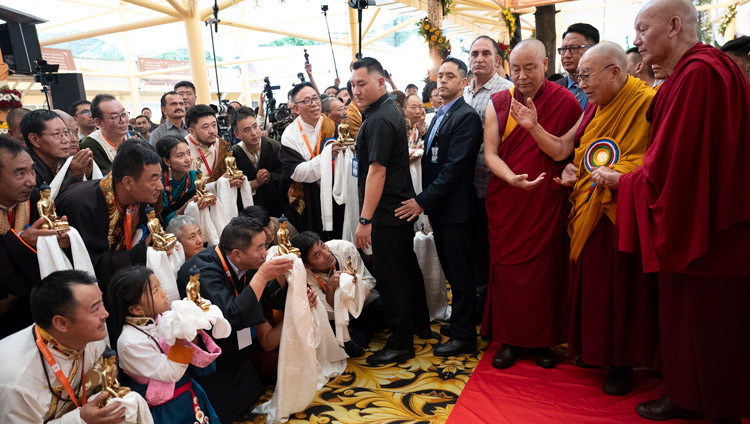
A Sacred Tradition Faces Political Pressure
According to Tibetan Buddhist belief, the Dalai Lama is the reincarnation of Avalokiteshvara, the Bodhisattva of Compassion. The current Dalai Lama, Tenzin Gyatso, was born as Lhamo Thondup in 1935. He was recognized as the 14th reincarnation at age two.
Traditionally, senior monks or high lamas search for the reincarnation using dreams, visions, and spiritual signs. The last search took place in Tibet. But now, the Dalai Lama has confirmed that his next reincarnation will be born outside China.
In his 2025 book Voice for the Voiceless, he wrote that “due to the political climate,” his successor would be born in a “free country.” Experts say this decision aims to prevent Beijing from influencing or controlling the sacred process.
This move not only preserves religious authenticity but also reinforces the Tibetan resistance to political manipulation.
China’s Claims and Political Intrusion
China responded swiftly and sharply to the Dalai Lama’s announcement. Within hours, Foreign Ministry spokesperson Mao Ning stated that the Dalai Lama’s succession must follow Chinese law.
She emphasized, “Reincarnation of living Buddhas, including the Dalai Lama, must follow national laws, religious rituals, and historical customs.”
Beijing cites an 18th-century Qing dynasty edict that requires using a “golden urn” to select reincarnated figures. In 2007, China tightened its grip further by introducing rules for “the management of the reincarnation of living Buddhas,” claiming full control over spiritual successions in Tibetan Buddhism.
Tibetan leaders strongly oppose this stance. They call it a political intrusion by a regime that officially rejects religion. “It is inappropriate for an atheist government to meddle in our sacred traditions,” said Dolma Tsering Teykhang, deputy speaker of the Tibetan Parliament-in-Exile.
Now, Tibetans fear the rise of a “rival Dalai Lama” — one selected by Beijing. This fear is not unfounded. In 1995, both the Dalai Lama and China chose different candidates as the 11th Panchen Lama. The child recognized by the Dalai Lama was abducted and never seen again. Meanwhile, China’s Panchen Lama now holds an official government role.
This history raises deep concerns about future interference and spiritual legitimacy.

India and the U.S.: Strategic and Moral Stakes
India, home to the Dalai Lama and over 100,000 Tibetan exiles, is central to the Dalai Lama’s succession issue. New Delhi has consistently supported him. It is expected to fully back the Gaden Phodrang Trust in choosing his successor.
In 2003, India officially recognized Tibet as part of China. However, the Dalai Lama’s presence in Dharamshala gives India strategic leverage in its often tense relationship with Beijing. Border tensions, especially in Ladakh, keep the situation sensitive.
The United States has also shown firm support. In 2024, President Joe Biden signed the Resolve Tibet Act. It clearly states that China has no right to interfere in the Dalai Lama’s reincarnation.
However, the picture under President Donald Trump, now in his second term, is less certain. His administration recently cut funding meant for Tibetan refugee support.
Despite this, bipartisan support in U.S. Congress remains strong. Lawmakers warn that any Dalai Lama chosen by China will not gain international recognition.
A Spiritual Leader Beyond Borders
The Dalai Lama has become a global symbol of peace over the decades. He has met influential figures like Barack Obama, Lady Gaga, Richard Gere, and Bill Gates. His teachings on compassion and mindfulness go far beyond Buddhism. As a result, millions worldwide follow his message.
For Tsayang Gyatso, a 40-year-old Tibetan from Delhi, the latest announcement is powerful. He traveled to Dharamshala to celebrate the Dalai Lama’s birthday.
“I feared China would corrupt the process, but hearing His Holiness speak today has given me hope. I feel blessed to be here,” he said.
Tibet remains under strict control by Chinese authorities. Therefore, the next Dalai Lama will face more than spiritual responsibilities. He must represent a displaced people, stand firm against political pressure, and protect Tibetan identity. His role will be critical in preserving a centuries-old culture while navigating global geopolitics.
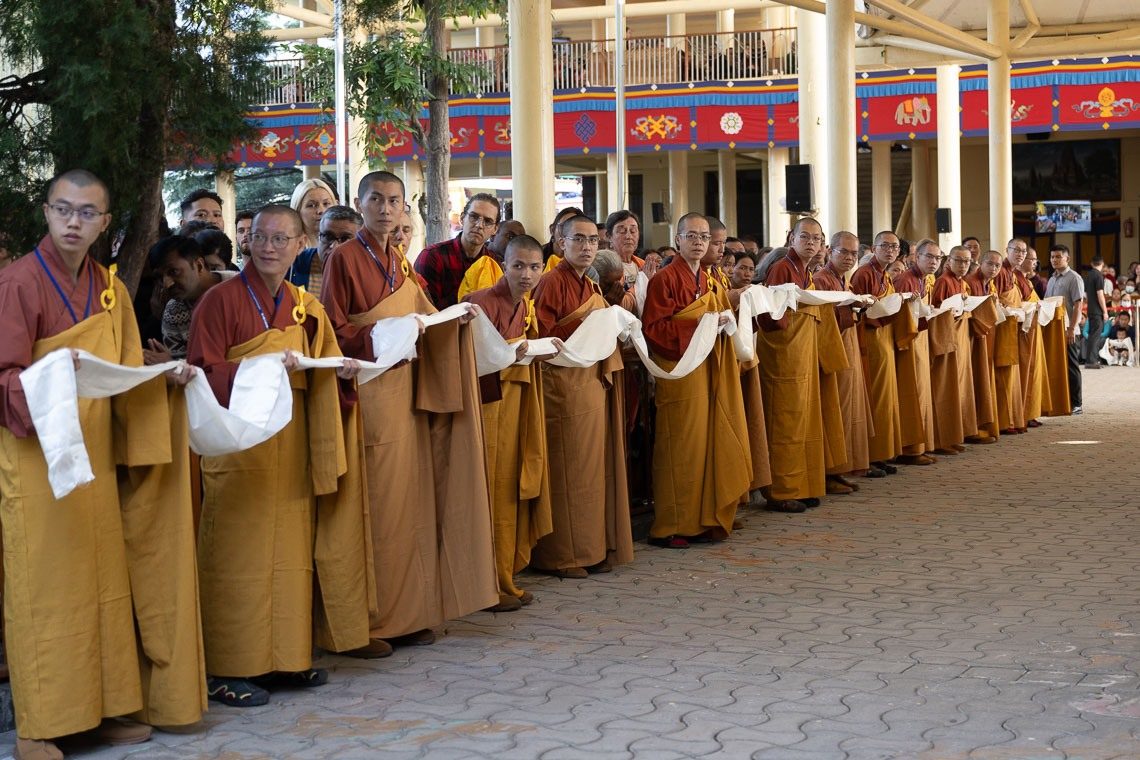
Statement Affirming the Continuation of the Institution of Dalai Lama
(Translated from the original Tibetan)
On 24 September 2011, at a meeting of the heads of Tibetan spiritual traditions, I made a statement to fellow Tibetans in and outside Tibet, followers of Tibetan Buddhism, and those who have a connection with Tibet and Tibetans, regarding whether the institution of the Dalai Lama should continue. I stated, “As far back as 1969, I made clear that concerned people should decide whether the Dalai Lama’s reincarnations should continue in the future.”
I also said, “When I am about ninety I will consult the high Lamas of the Tibetan Buddhist traditions, the Tibetan public, and other concerned people who follow Tibetan Buddhism, to re-evaluate whether or not the institution of the Dalai Lama should continue.”
Although I have had no public discussions on this issue, over the last 14 years leaders of Tibet’s spiritual traditions, members of the Tibetan Parliament in Exile, participants in a Special General Body Meeting, members of the Central Tibetan Administration, NGOs, Buddhists from the Himalayan region, Mongolia, Buddhist republics of the Russian Federation and Buddhists in Asia including mainland China, have written to me with reasons, earnestly requesting that the institution of the Dalai Lama continue. In particular, I have received messages through various channels from Tibetans in Tibet making the same appeal. In accordance with all these requests, I am affirming that the institution of the Dalai Lama will continue.
The process by which a future Dalai Lama is to be recognized has been clearly established in the 24 September 2011 statement which states that responsibility for doing so will rest exclusively with members of the Gaden Phodrang Trust, the Office of His Holiness the Dalai Lama. They should consult the various heads of the Tibetan Buddhist traditions and the reliable oath-bound Dharma Protectors who are linked inseparably to the lineage of the Dalai Lamas. They should accordingly carry out the procedures of search and recognition in accordance with past tradition.
I hereby reiterate that the Gaden Phodrang Trust has sole authority to recognize the future reincarnation; no one else has any such authority to interfere in this matter.
Dalai Lama
Dharamshala
21 May 2025.
The Office of His Holiness the Dalai Lama
PARLACEN Backs Morocco’s Western Sahara Autonomy Plan
WEF: World Economic Forum on IMF/ WBG Spring Meetings, 2024 @ Washington DC


