
Ukraine parliament voted overwhelmingly on Thursday to restore the independence of two major anti-corruption bodies. This decision came just a week after President Volodymyr Zelenskyy approved legal changes that had curtailed their power, triggering widespread protests and international criticism.
Protests Force Government to Backtrack in Ukraine Parliament
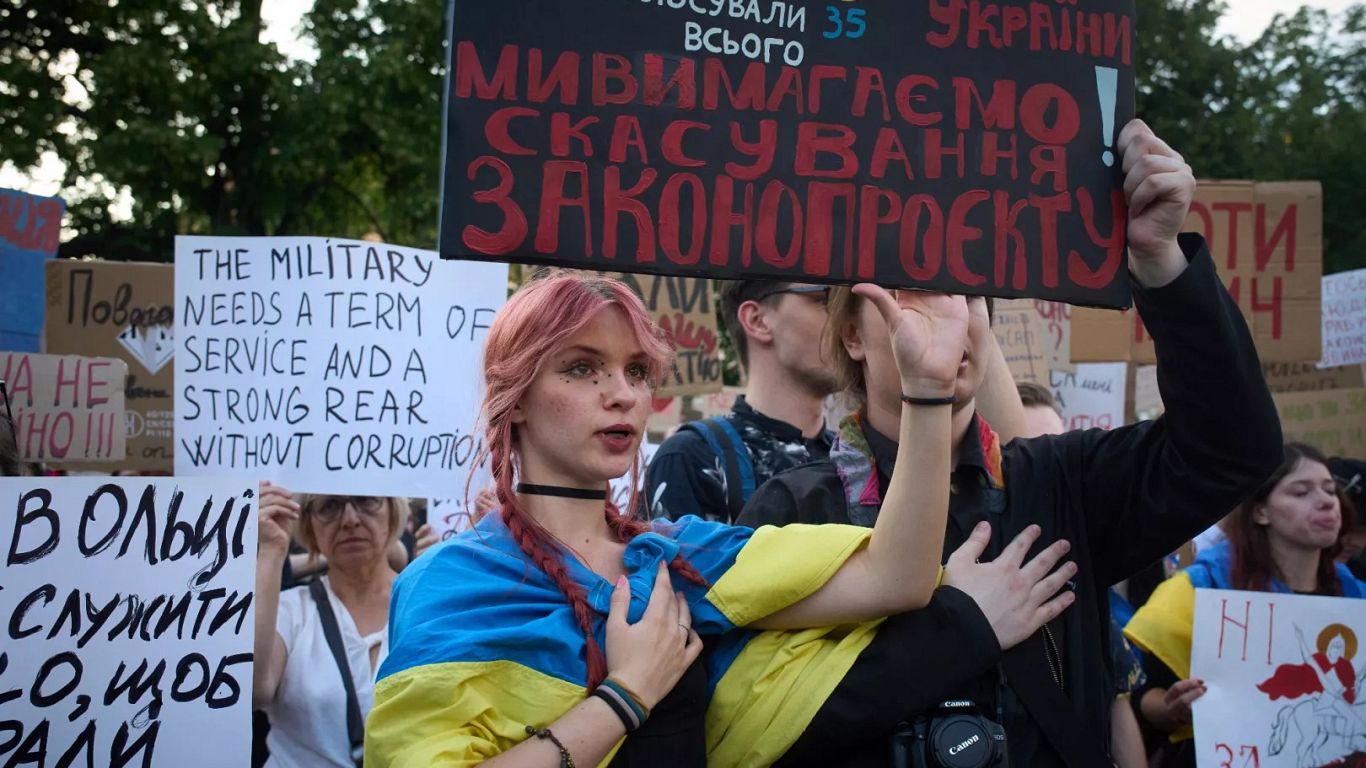
Last week’s law put the National Anti-Corruption Bureau of Ukraine (NABU) and the Specialised Anti-Corruption Prosecutor’s Office (SAPO) under the oversight of the prosecutor-general. Many Ukrainians, European leaders, and international rights groups condemned the move. Thousands took to the streets in Kyiv and other cities. Protesters, many of them young, sang the national anthem and held signs demanding the reversal of the law. This marked the largest protests since Russia’s full-scale invasion began in February 2022.
Swift Legislative Response in Ukraine Parliament
Alarmed by the intensity of public reaction, President Zelenskyy quickly pledged to fix the situation. On Thursday, the Verkhovna Rada—the Ukrainian parliament—passed a new bill by an overwhelming majority of 331 votes with only nine abstentions. The new law restores NABU’s and SAPO’s independence and ensures the prosecutor general’s office cannot interfere in their investigations.

Public and European Pressure
The backlash was swift. The EU’s Enlargement Commissioner, Marta Kos, called the law a “serious step back” for Ukraine’s reform efforts. Transparency International Ukraine also criticized the legislation as damaging to post-2014 anti-corruption reforms. European leaders warned Zelenskyy that his government’s move could jeopardize crucial Western aid and Ukraine’s pathway to European Union membership.
Officials Respond
Oleksandr Klymenko, head of SAPO, welcomed the reversal, noting that the agencies’ effectiveness had been proven. He warned, however, that the previous week’s events had left the organizations “confused and frightened” and already impacted communication with government whistleblowers. Klymenko also highlighted that NABU and SAPO had opened investigations into 31 current MPs, underscoring their key preventive role against corruption.
Foreign Minister Andrii Sybiha confirmed the government’s commitment to reform. “We anticipate the vote tomorrow. The relevant parliamentary committee has already given its approval. We are getting this fixed,” Sybiha stated.
EU and Public Reactions
Commissioner Kos praised the parliament’s quick action. “Today’s law restores key safeguards, but challenges remain. The EU supports Ukrainian citizens’ demands for reform. Upholding fundamental values and fighting corruption must remain the priority,” she posted on X.
Why This Matters
Fighting corruption is essential for Ukraine’s EU membership ambitions and to maintain billions of dollars in Western support during its ongoing war with Russia. The episode shows the strength of Ukrainian civil society and its ability to influence government action, even during wartime. The government’s willingness to listen and reverse course amid pressure is being viewed as a sign of democracy’s resilience in Ukraine.
What’s Next?
Ukraine now faces the challenge of rebuilding trust in its anti-corruption system and maintaining momentum on reform. EU officials stress that continued progress against corruption is vital for Ukraine’s security, prosperity, and future in Europe.
By acting decisively after public and international criticism, Ukraine’s government signaled it remains committed to transparency and reform—even in the face of immense external and internal pressures.
Ukraine Parliament – Verkhovna Rada of Ukraine
UK Parliament: Britain’s Chancellor of the Exchequer Rachel Reeves in tears
Yulia Svyrydenko Appointed Ukraine’s First Female Wartime Prime Minister


