
Damascus (SYRIA) – Syria will hold its first Syria Parliament Election under new leadership between September 15 and 20, authorities confirmed on Sunday. This landmark decision comes just seven months after the ousting of Bashar al-Assad, which brought an end to over 60 years of Baath Party rule.
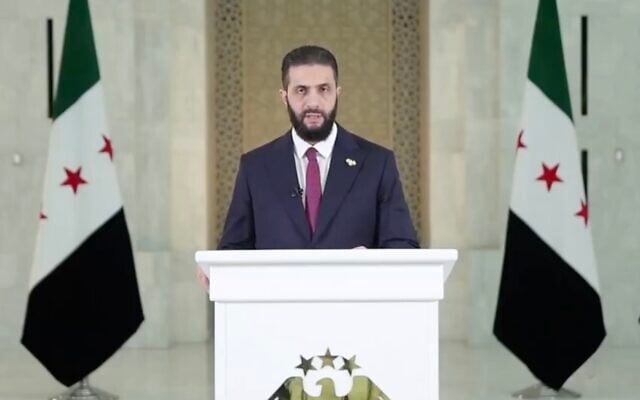
President Ahmed al-Sharaa will supervise the electoral process, operating under a temporary constitutional declaration that was enacted in March. Under this new framework, the People’s Assembly will expand from 150 to 210 seats, signaling a significant shift in the country’s political structure.
Of the 210 seats:
Local electoral bodies will elect 140 members, ensuring broader representation across provinces.
Meanwhile, President Sharaa will appoint the remaining 70 seats, reinforcing the administration’s influence during the transition.
The newly formed assembly will serve a 36-month term. During this period, it will focus on drafting a permanent constitution and laying the legal foundation for future democratic elections.
Syria Parliament Election: Key Electoral Reforms
On Saturday, the High Election Committee met with President Ahmed al-Sharaa to present the final amendments to Syria’s electoral law. Following the meeting, committee head Mohammad Taha al-Ahmad outlined several key reforms.
To ensure broader inclusion, women will comprise at least 20% of the electoral bodies. Furthermore, the election process will be open to monitoring by both civil society organizations and international observers. The revised system will also bar candidates who supported war crimes or fueled sectarianism, signaling a commitment to justice and unity.
Once the subcommittees are formed, authorities will open candidate registration, followed by a one-week campaign period. During this time, candidates will participate in debates with electoral officials to present their platforms.
In an effort to maintain national representation, the government will allocate parliamentary seats even in regions outside its control, including Kurdish-held areas and the Druze-majority province of Sweida.
However, the political transition faces serious challenges. Earlier this month, sectarian violence broke out in Sweida, igniting tensions across the region. Government forces, siding with armed Bedouin clans, reportedly killed several Druze civilians and looted homes. In retaliation, Israel launched airstrikes targeting Syrian military positions, including the Defense Ministry, claiming to defend the Druze community.
Syria Parliament Election: Critics Warn of Power Concentration
Some civic groups and foreign governments have raised concerns about the centralization of power in the new system. Critics argue that the temporary constitution does not ensure adequate minority representation.
Despite the challenges, the upcoming vote is seen as a crucial step toward political reform and post-war recovery.
What’s Next?
- Decree signing will trigger the setup of local electoral bodies.
- Subcommittees will form within a week.
- Electoral bodies will be finalized within 15 days.
- Candidate campaigns and debates will follow.
Sharaa’s office confirmed receipt of the final version of the electoral law Saturday night.
Syria Parliament- Majlis Al-Chaab / People’s Assembly
Iraq Parliament: Know about Iraqi PM Mohammed Shiaa al-Sudani’s new moves


