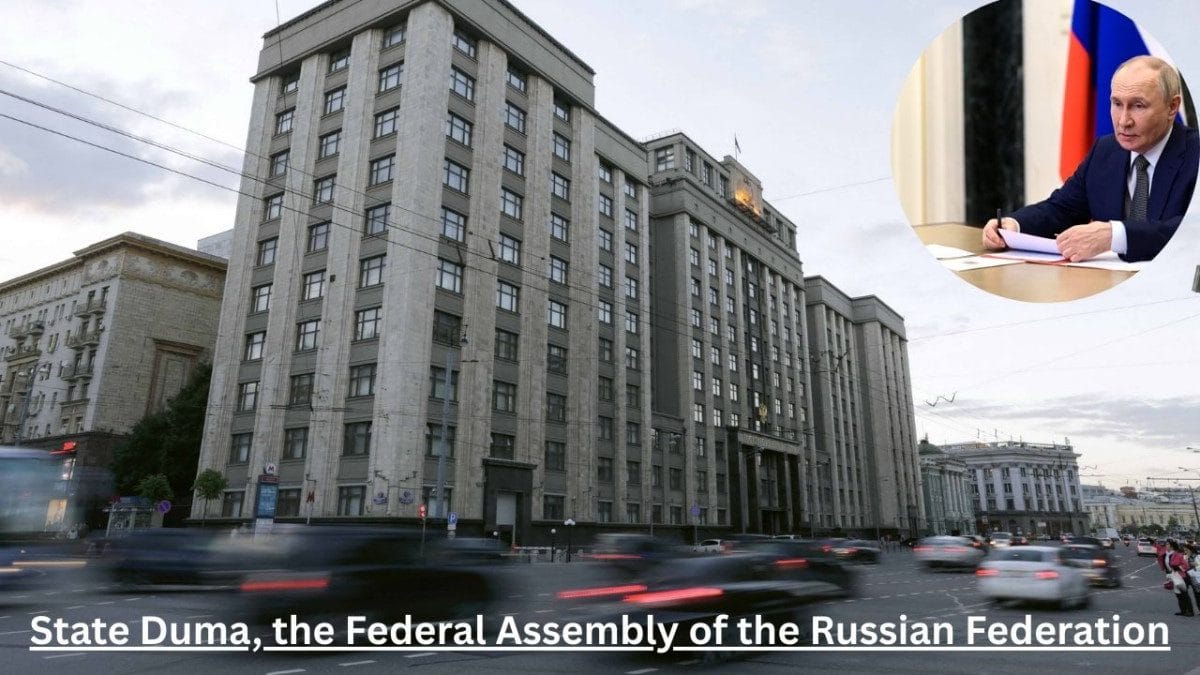
The State Duma serves as the lower house of Russia’s Federal Assembly, the national parliament. It comprises 450 members elected for five-year terms. These deputies are responsible for adopting federal constitutional and federal laws, overseeing the government’s activities, and handling appointments to key institutions like the Central Bank and the Accounts Chamber.
State Duma: Origins and Evolution
The concept of a representative legislative body in Russia traces back to the boyar dumas of Kievan Rus’ and Muscovite Russia . The modern State Duma was established in 1905 following the October Manifesto issued by Tsar Nicholas II. This manifesto aimed to address the demands for political reform after the 1905 Revolution. The first State Duma convened in 1906, marking Russia’s initial step towards parliamentary governance .
State Duma: Structure and Functions
The State Duma operates alongside the Federation Council, forming the Federal Assembly. It plays a pivotal role in shaping federal laws, which hold the highest legal authority in Russia. The Duma’s legislative duties include:
- Adopting federal constitutional and federal laws.
- Providing consent for the appointment of the Prime Minister.
- Deciding on issues of confidence in the government.
- Appointing and dismissing heads of major institutions like the Central Bank and the Accounts Chamber.
- Proclaiming amnesty.
- Advancing charges against the President for impeachment.
Historical Significance
The State Duma’s establishment in 1905 was a significant shift from Russia’s traditional autocratic governance. Although initially limited in power, it represented a move towards a more representative political system. The Duma’s activities, particularly during World War I, highlighted its role in challenging the imperial regime, contributing to the events leading up to the February Revolution of 1917.
Modern Role
In contemporary Russia, the State Duma continues to be a central institution in the legislative process. It addresses a wide array of issues, from economic reforms to social policies, reflecting the evolving needs of the Russian Federation. The Duma’s decisions have a direct impact on the country’s legal and political landscape, underscoring its importance in the federal system.
G20: P20: Russia @ 9th G20 Parliamentary Speakers’ Summit (P20)
Romania: Who is George Simion, Complete profile of Romanian Political Firebrand