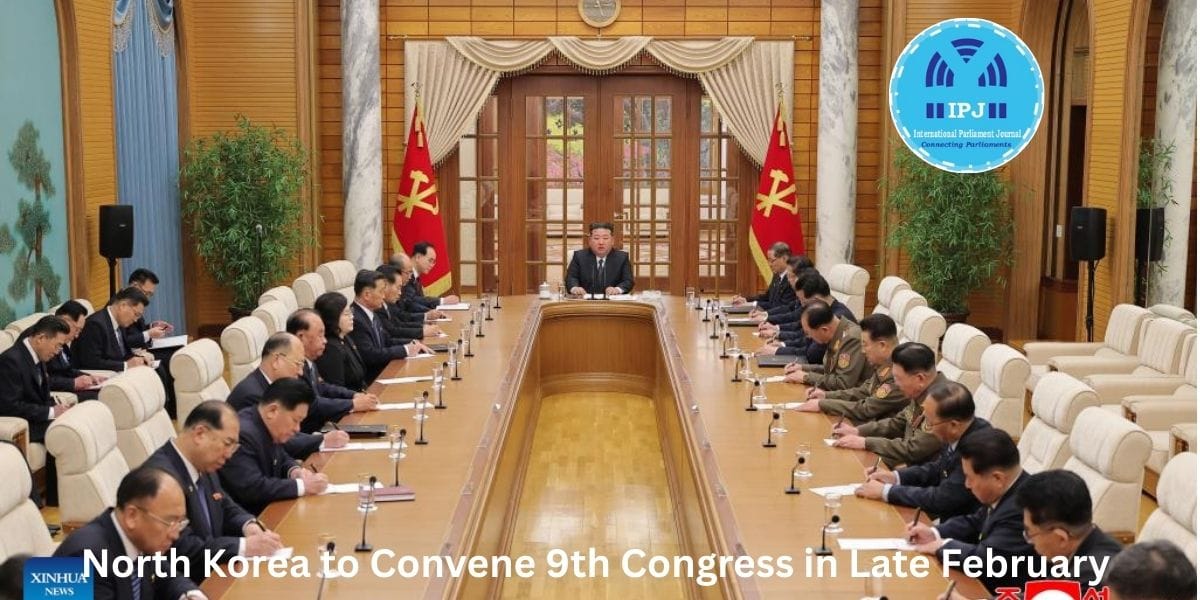
Pyongyang, North Korea — North Korea’s ruling Workers’ Party of Korea (WPK) is set to convene its 9th Party Congress in late February 2026, a rare and highly significant political gathering that will shape the country’s direction for the next five years. The announcement was made by the state-run media agency KCNA following a Politburo meeting of the WPK Central Committee.
This event marks the first Party Congress since 2021 and is one of the most important political events in the isolated regime’s calendar, where key policy decisions on the economy, military strategy, and foreign relations are expected to be unveiled.
What Is the Workers’ Party Congress?
The Party Congress is the highest decision-making forum of the WPK and typically convenes every five years. It is where:
Major shifts in national policy are announced;
Leadership directives are clarified;
Long-term plans for defense, diplomacy, and domestic governance are set.
This will be the 9th such congress under the WPK framework.
North Korea 9th Party Congress: Timing and Announcement
State media reported that the decision to open the 9th Congress was unanimously adopted by the political bureau of the WPK’s Central Committee at a meeting chaired under the guidance of leader Kim Jong Un. The congress is expected to begin in late February 2026 in Pyongyang, though no exact start date has been formally announced.
Preparatory work has included:
Reviewing delegate qualifications;
Organizing presidium, secretariat, and platform structures;
Setting the schedule and agenda for deliberations.
Sanae Takaichi Becomes Japan’s First Female Prime Minister
North Korea 9th Party Congress: Key Issues on the Agenda
Long-Term Policy Roadmap
Kim Jong Un is anticipated to present a five-year development plan outlining priorities in:
Economic self-reliance and development;
Strengthening military capabilities, including nuclear deterrence;
Foreign policy direction, particularly regarding ties with China, Russia, and possible engagement with the United States.
Analysts believe this congress could reaffirm the regime’s emphasis on strategic defense and economic autonomy amid heightened regional tensions.
Military Posture and Defense
North Korea has already conducted several ballistic missile test launches ahead of the congress, seen by observers as signaling its ongoing commitment to bolstering its strategic deterrent.
Satellite imagery suggests preparations for a military parade coinciding with the congress — a traditional showcase of the state’s military strength.
Policy Implications and Global Watch points
Domestic Policy
The congress will likely address internal governance, economic challenges, and party discipline. Recent state media messaging has underscored the need for heightened loyalty and managerial discipline among officials, reflecting the regime’s tight control in the lead-up to the event.
Foreign Relations
The global community is watching closely for signals on:
Inter-Korean relations — particularly following recent tensions and North Korea’s continued missile activities;
U.S.–North Korea diplomacy — there is speculation on how the leadership might frame engagement with Washington during the next U.S. administration;
The role of strategic ties with Russia and China in shaping Pyongyang’s foreign policy for the next half-decade.

North Korea 9th Party Congress: Why This Matters
The 9th Party Congress is not just a symbolic ritual — it determines policy direction and leadership priorities in one of the world’s most secretive states. Thought by many analysts to be a barometer for future diplomatic overtures and regional strategy, the congress holds implications for:
East Asia’s security environment;
Nuclear non-proliferation challenges;
Humanitarian and economic engagement frameworks.
Contextual Background
The last such congress was held in 2021, a full five years ago, underscoring the regular rhythm of these high-level political gatherings.
Historically, Party Congress events are used to announce both domestic policy blueprints and military development strategies that guide North Korea’s governance until the next session.
What to Expect Next
As the congress approaches:
Pyongyang is likely to release more details about the exact dates and key participants.
Satellite monitoring and external analysis will track military preparations and policy signals.
International diplomatic communities, especially in Seoul, Washington, and Beijing, are closely watching for potential shifts in rhetoric or policy priorities following the opening of the congress.