To become Germany’s Federal Chancellor, a person must be at least 18 years old and a German citizen. They do not need to hold a seat in the Bundestag.
The Federal President proposes a candidate after consulting with all parliamentary groups in the Bundestag.
The Election Process for the German Chancellor
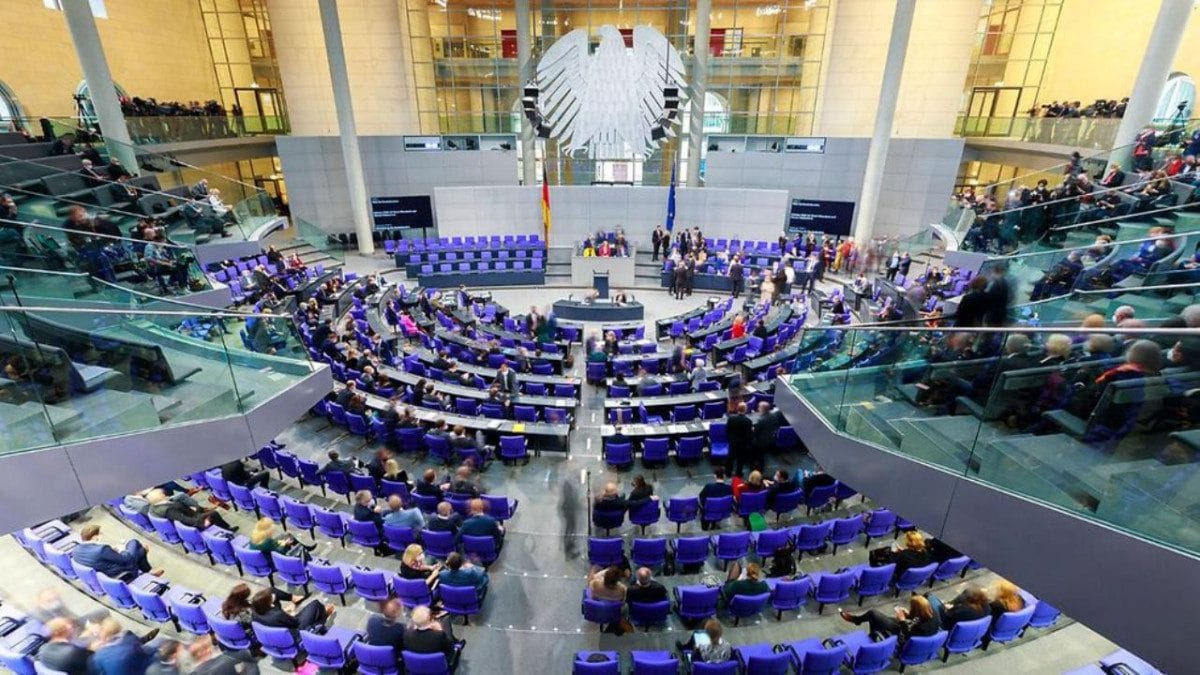
Article 63 of the Basic Law (Grundgesetz) outlines the process. The Bundestag elects the Chancellor without debate based on the President’s proposal. Members of the Bundestag vote on behalf of the people.
German citizens elect the Bundestag every four years. The Bundestag then chooses who will lead the government.
To win, a candidate must get an absolute majority. This means more than half of the Bundestag members plus one vote. This is called the “chancellor majority.”
If no one wins in the first round, a second round begins. The Bundestag has 14 days to elect a candidate. They can vote as many times as needed during this period. Each time, the candidate needs an absolute majority.
If no one wins after 14 days, the Bundestag holds a final vote. In this third round, the candidate with the most votes (a relative majority) wins.
If the winner only gets a relative majority, the President must choose either to appoint them or dissolve the Bundestag.

Term of Office for the German Chancellor
The Basic Law does not set a fixed term or limit the number of terms. Normally, the Chancellor serves for four years, the length of one legislative period (Article 39.1).
The Chancellor’s term begins when the President gives them an official appointment letter. It usually ends when the new Bundestag meets.
According to Article 69, the Chancellor must continue in office if the President requests it. They stay until a new Chancellor takes over.
The Bundestag can remove the Chancellor by passing a vote of no confidence. But they must elect a new Chancellor at the same time.
So far, this has happened only once. In 1982, Helmut Kohl replaced Helmut Schmidt through a constructive vote of no confidence.
Friedrich Merz is German Chancellor
G7 Italia, 2024: G7 meeting with Outreach Countries and International Organizations