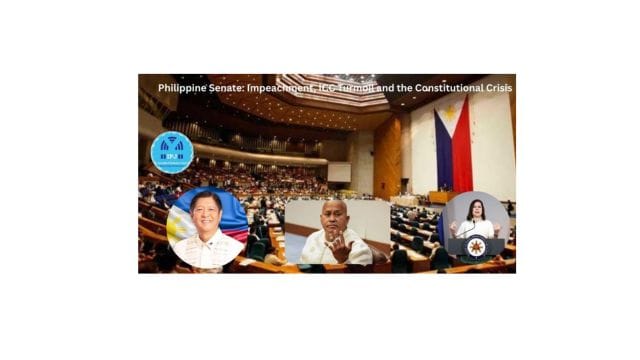
Manila (Philippines): The Senate of the Philippines has become the epicenter of one of the gravest constitutional and political crises in the country’s democratic history. What began as a bitter power struggle between President Ferdinand Marcos Jr. and Vice President Sara Duterte has evolved into a dramatic confrontation involving impeachment proceedings, International Criminal Court (ICC) arrest warrants, Senate leadership battles, gunfire inside the Senate complex and deepening fears about institutional stability.
For The International Parliament Journal (IPJ), the Philippine Senate in 2026 represents far more than a legislative institution. It has become:
- a constitutional battlefield,
- a theater of dynastic warfare,
- and a test case for democratic resilience in Southeast Asia.
The unfolding crisis is reshaping not only the future of the Duterte political dynasty, but also the credibility of the Philippine Senate itself.
The Senate at the Center of a National Crisis
The Senate of the Philippines occupies a unique role in the country’s constitutional order.
Unlike many upper chambers globally, the Philippine Senate exercises immense authority over:
- impeachment trials,
- treaty approvals,
- executive oversight,
- national security debates,
- and constitutional accountability.
In 2026, that power has become dramatically visible.
The Senate is simultaneously:
- acting as an impeachment court,
- confronting international legal pressure,
- managing internal security chaos,
- and navigating a political war between two of the country’s most powerful dynasties:
the Marcoses and the Dutertes.

The Impeachment of Vice President Sara Duterte
The immediate trigger for the crisis was the impeachment of Vice President Sara Duterte by the House of Representatives in May 2026.
The impeachment articles accuse Duterte of:
- misuse of confidential funds,
- unexplained wealth,
- bribery,
- and threatening President Ferdinand Marcos Jr., First Lady Liza Araneta Marcos and former House Speaker Martin Romualdez.
Duterte has denied all allegations, calling the impeachment politically motivated.
The Senate formally convened as an impeachment court in May 2026, transforming lawmakers into senator-judges in a process that could determine whether Sara Duterte remains eligible to contest the 2028 presidential election.
Under Philippine law, conviction requires a two-thirds Senate majority.
That threshold has turned parliamentary arithmetic into a matter of national political survival.

The Duterte-Marcos Alliance Has Collapsed
The impeachment crisis reflects the complete breakdown of the once-powerful Marcos-Duterte alliance that dominated the 2022 elections.
President Ferdinand Marcos Jr. and Sara Duterte originally governed as political partners:
- Marcos as president,
- Duterte as vice president,
- and both dynasties sharing power.
But by 2026, that alliance had disintegrated into open warfare.
The Duterte camp accuses Marcos allies of weaponizing institutions to destroy Sara Duterte’s political future before the 2028 presidential race.
Meanwhile, Marcos supporters argue the impeachment is necessary to preserve accountability and constitutional integrity.
The Senate has therefore become the institutional arena where this dynastic conflict is unfolding.
The Ronald “Bato” dela Rosa Crisis
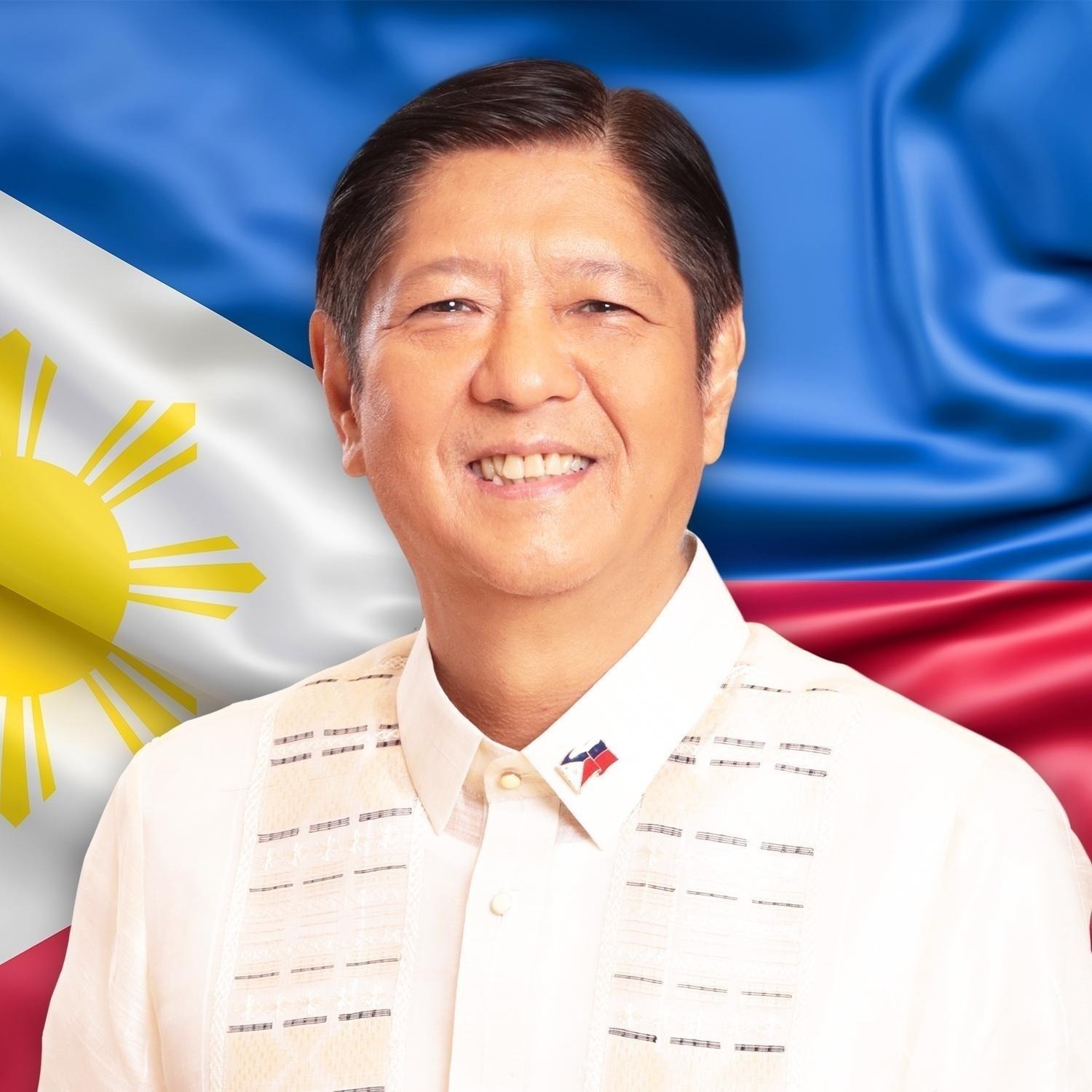
The Senate crisis escalated dramatically when Senator Ronald “Bato” dela Rosa — former national police chief and close Duterte ally — became the subject of an International Criminal Court arrest warrant tied to Rodrigo Duterte’s anti-drug campaign.
The ICC accuses dela Rosa of crimes against humanity linked to thousands of killings during the Duterte-era drug war.
Dela Rosa disappeared for months before suddenly resurfacing inside the Senate in May 2026 to support a Duterte-aligned leadership push.
His appearance triggered chaos.
According to Reuters, AP and multiple Philippine reports:
- security tensions escalated inside the Senate compound,
- armed officers attempted operations connected to his arrest,
- confusion erupted among security personnel,
- and gunfire was reported within the Senate complex itself.
The event stunned the country.
For many Filipinos, it was unprecedented:
the Senate — traditionally viewed as a constitutional institution — had become the scene of a near-security breakdown.
The “Senate Lockdown” and Institutional Shock
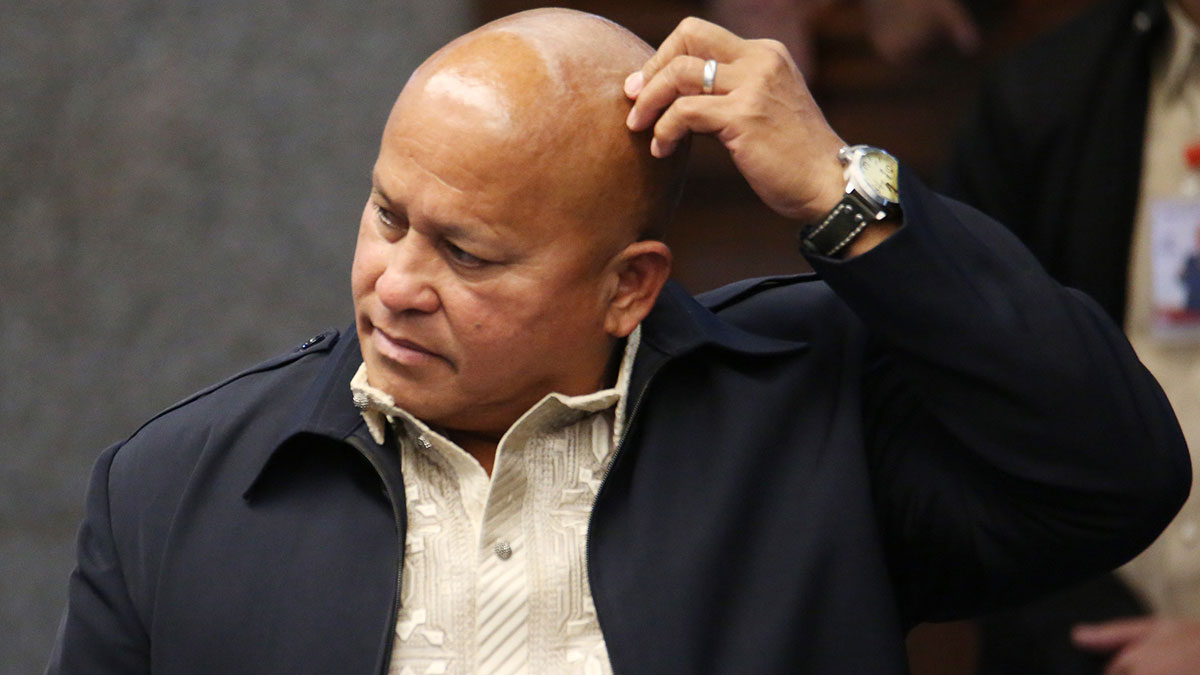
The events between May 11 and May 13, 2026 are now widely referred to as the “Philippine Senate lockdown.”
Reports indicate:
- sections of the Senate were sealed,
- lawmakers clashed politically over security decisions,
- police movements triggered panic,
- and dela Rosa ultimately escaped through a fire exit before vanishing again.
The crisis exposed serious constitutional questions:
- Can the Senate shield lawmakers from international arrest?
- How far can parliamentary immunity extend?
- Does sovereignty override ICC obligations?
- And can legislative institutions remain neutral during dynastic warfare?
The Senate suddenly became both:
- a legislative chamber,
- and a battlefield over international criminal law.

The ICC and Philippine Sovereignty Debate
At the center of the political storm lies the International Criminal Court.
The ICC continues pursuing cases connected to former President Rodrigo Duterte’s anti-drug campaign, which rights groups say resulted in thousands of extrajudicial killings.
Rodrigo Duterte is currently detained in The Hague awaiting trial.
Supporters of the Duterte camp insist:
- the Philippines withdrew from the ICC,
- the court lacks jurisdiction,
- and international intervention violates sovereignty.
Opponents argue:
- crimes against humanity require accountability,
- domestic institutions failed to investigate abuses,
- and Senate allies are obstructing justice.
The Senate itself is now deeply divided on these questions.
Senate Leadership and the “Senate Coup”
Another critical development was the abrupt leadership change inside the Senate.
Senator Alan Peter Cayetano emerged as Senate president with support from Duterte-aligned lawmakers.
Critics described the maneuver as a “Senate coup.”
The leadership shift was strategically important because:
- Senate procedure shapes impeachment timelines,
- committee assignments influence investigations,
- and leadership control affects Duterte’s chances of acquittal.
In parliamentary systems, procedural control often determines political outcomes.
The Philippine Senate is now demonstrating that reality in dramatic fashion.

Constitutionalism Under Pressure
The Philippine Senate crisis is not only about personalities.
It reflects deeper tensions within Philippine democracy itself:
- dynastic politics,
- institutional fragility,
- executive-legislative rivalry,
- and weak party structures.
Unlike ideological parliamentary systems, Philippine politics often revolves around:
- personalities,
- alliances,
- and political families.
That means institutions become vulnerable when elite alliances collapse.
The Senate today is struggling to preserve constitutional legitimacy while simultaneously being pulled into partisan warfare.
The Impeachment Court as Political Theater
The Senate impeachment proceedings have also become a national political spectacle.
Televised hearings, dramatic Senate speeches and public demonstrations outside the chamber are transforming the impeachment into a referendum on:
- Duterte-era politics,
- Marcos leadership,
- accountability,
- and democratic legitimacy.
Reuters reported that protests both supporting and opposing Duterte erupted outside the Senate during impeachment proceedings.
This makes the Senate not merely a judicial forum —
but a stage for competing visions of the Philippine state.

The Senate and the 2028 Presidential Election
Everything unfolding in the Senate today is connected to the 2028 presidential race.
Sara Duterte remains one of the country’s strongest political figures despite impeachment proceedings.
If convicted by the Senate:
- she could be removed from office,
- permanently barred from public office,
- and eliminated from presidential contention.
If acquitted:
- she could emerge politically strengthened,
- portray herself as a victim of elite persecution,
- and become even more powerful nationally.
The Senate therefore holds the political future of the Philippines in its hands.
Democratic Institutions Under Strain
Perhaps the most significant issue is what the crisis reveals about institutional resilience.
The Philippine Senate is simultaneously trying to function as:
- a legislative body,
- a constitutional court,
- a crisis-management institution,
- and a political mediator.
But the overlapping pressures are testing democratic norms.
The events of 2026 show how quickly:
- parliamentary procedure,
- constitutional law,
- criminal accountability,
- and political survival
can collide inside democratic institutions.
Why the Philippine Senate Matters Globally
The Senate crisis matters internationally because it reflects broader global trends:
- populist dynasties,
- politicized institutions,
- executive-legislative conflict,
- and the tension between sovereignty and international justice.
The Philippines is becoming a major case study in: how democratic legislatures behave under conditions of polarization and dynastic confrontation
The Senate’s handling of:
- impeachment,
- ICC pressure,
- parliamentary procedure,
- and institutional security
will shape perceptions of Philippine democracy for years.
The Central Question Facing the Senate
The central question confronting the Philippine Senate is no longer simply whether Sara Duterte will be convicted.
The deeper issue is whether the Senate can remain:
- constitutionally credible,
- politically independent,
- and institutionally stable
while being pulled into one of the fiercest political battles in modern Philippine history.
What happens inside the Senate chamber in Manila over the coming months may determine:
- the future of the Duterte dynasty,
- the direction of Philippine democracy,
- and the credibility of constitutional governance in Southeast Asia itself.
IPJ Editorial Commentary: The Collapse of Parliamentary Sanctuary
From an institutional perspective, the recent events in Manila offer a stark warning regarding the fragility of democratic checks and balances. The Philippine Senate has long pridefully operated under a gentleman’s agreement of deep institutional autonomy, viewing its physical walls as a sanctuary from executive overreach.
However, by transforming the legislative chamber into a literal bunker to harbor a fugitive accused of international atrocities, the new Senate leadership has severely degraded the institution’s public legitimacy. The armed clash between parliamentary guards and state investigators represents a dangerous breakdown of constitutional boundaries.
As the Senate prepares to try the Vice President in July, it does so under a shadow. It is no longer just the defendants who are on trial; the structural integrity, legal independence, and moral authority of the Philippine Senate itself are facing an existential cross-examination on the global stage.

May Labour Day IPJ Special: Year 2014 Nobel Peace Laureate Kailash Satyarthi, Man who fought against the worst form of labour practice- Child Labour
Senate of the Philippines
Philippines Department of Foreign Affairs
Iran Parliament ‘Majlis’ in 2026: Power, Crisis, and the Politics of Survival