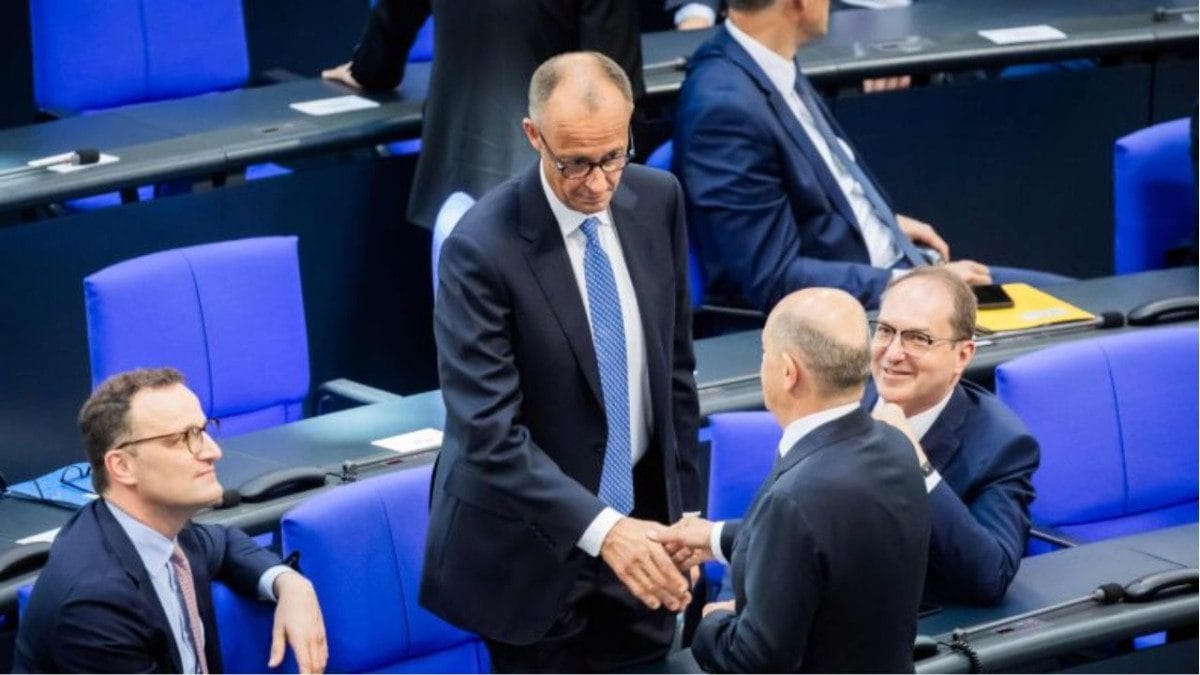
A Late Rise to the Chancellery
Friedrich Merz became Germany’s oldest post-war chancellor at age 69 after a dramatic second-round Bundestag vote, which exposed tensions within the new ruling coalition. Lacking prior top-level government experience, his election marks a rare ascent in German politics—one defined more by persistence and ideological clarity than by executive résumé.
Friedrich Merz Unprecedented Path in Politics
Despite decades in the Bundestag and European Parliament, Merz had never served as a federal minister, state premier, or mayor. His political comeback began in 2021 when he re-entered parliament, later taking leadership of the CDU in 2022. Known for his business background and sharply conservative policy views, Merz represents a stark departure from the centrist legacy of Angela Merkel.
Friedrich Merz, a Coalition Partner and Controversial Mediator
Merz now leads a complex coalition with the SPD and CSU, two parties with different ideological roots. Having never previously negotiated a government coalition, Merz faces a steep learning curve as he attempts to mediate between fiscally cautious conservatives and more social-minded Social Democrats.
Transatlantic Values and European Commitment
Described by Wirtschaftswoche as a “transatlanticist, friend of Europe, and reformer,” Merz champions deeper cooperation with Western allies. He has cultivated ties with European leaders and plans to visit U.S. President Donald Trump in the coming months—underscoring Germany’s role in maintaining transatlantic stability.
A More Assertive Foreign Policy
Merz is positioning Germany as a more proactive supporter of Ukraine, calling for the delivery of Taurus cruise missiles and suggesting a stronger military posture toward Russia. This sets him apart from his predecessor Olaf Scholz, who avoided such escalatory measures.
Fiscal Flip-Flop Sparks Internal Division
A vocal proponent of the “debt brake,” Merz reversed course to approve €500 billion in spending for defense and infrastructure. While seen as bold, this shift caused friction within the CDU and raised questions about his fiscal consistency.
Facing the AfD Challenge
The far-right Alternative for Germany (AfD) continues to gain ground, pressuring Merz’s coalition from the right. In a controversial move, Merz accepted AfD votes on migration policy—a decision that blurred the firewall mainstream parties pledged to uphold and drew significant backlash.
From Sauerland to Berlin
Born and raised in Sauerland, North Rhine-Westphalia—a conservative, Catholic stronghold—Merz built a successful career in law and finance. He served as chairman of BlackRock Germany from 2016 to 2020, reinforcing his image as a businessman-politician with global credentials.
Vision for Unity and Renewal
Merz has pledged to restore national confidence, portraying Germany as a resilient and capable country. His message emphasizes family, work ethic, and conservative values, even as he confronts deep political divides and an electorate wary of both extremes.
Belgium: Who is Bart De Wever, Belgium’s first-ever Flemish nationalist prime minister