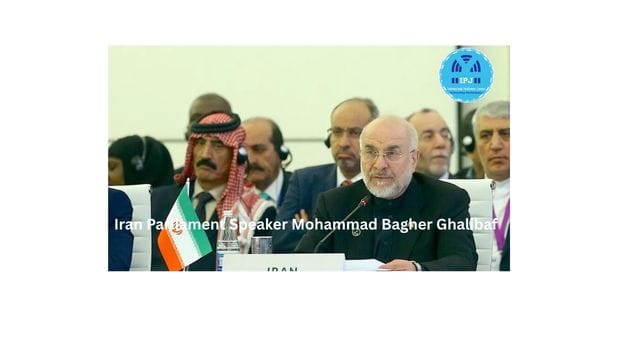
TEHRAN, September 8, 2026: Iran’s Parliament has moved to further institutionalise Tehran’s control over access to the strategically vital Strait of Hormuz, while Parliament Speaker Mohammad Bagher Ghalibaf has warned the United States that any further attack on Iranian interests or security will trigger a response that will be “faster, heavier and more painful.”
The developments mark a significant escalation in the parliamentary and political dimension of the confrontation between Tehran and Washington, with the Strait of Hormuz increasingly becoming the central flashpoint in the wider conflict.
Ghalibaf’s warning came after the United States struck three Iranian oil tankers and after Washington threatened further action against Iran’s oil fleet if Iranian forces attacked US naval vessels.
At the same time, the Iranian Parliament’s National Security and Foreign Policy Commission approved Article 9 of a proposed strategic plan for the Strait of Hormuz, under which countries, companies and individuals deemed to have imposed unilateral sanctions or taken hostile measures against Iran could be barred from transiting the waterway.
The measure would also extend the proposed restrictions to vessels and cargoes linked to those countries and entities.
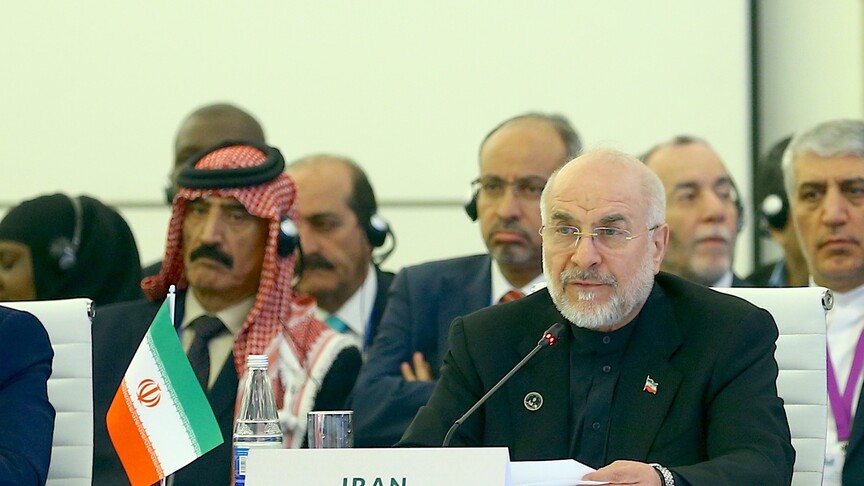
Ghalibaf: Era of ‘proportionate responses’ is over
Speaking during a parliamentary session, Ghalibaf said Tehran’s approach to responding to attacks had changed.
“The Americans must have understood that the era of ‘proportionate responses’ is over,” he said, warning that any further aggression against Iranian interests or security would receive a “faster, heavier and more painful response.”
Ghalibaf said recent Iranian military operations against US positions should not be viewed as the limit of Tehran’s response, describing them instead as only a beginning.
His remarks were subsequently reinforced through a statement on social media responding directly to US Defense Secretary Pete Hegseth.
Ghalibaf said the oil and gas production chain in the region was “sprawling, accessible, and exposed” and warned that American oil and gas companies operating across the waters and facilities of the region could also be vulnerable.
“Strike our assets, and you get struck. We’ve already proven it,” he said.
The statement came after Hegseth warned that the United States would destroy Iranian oil tankers if Iran attacked American ships.
US strikes three Iranian tankers
The latest exchange of threats followed a major escalation at sea.
The US military said Iranian forces had launched ballistic missiles towards two US Navy warships operating in the region. According to the US Central Command, the American aircraft carrier and guided-missile destroyer successfully evaded the attacks and no US personnel were injured.
Washington subsequently struck three Iranian crude-oil carriers.
US Central Command said two vessels were permanently disabled while a third, an unladen tanker, was destroyed after its crew was ordered to abandon the ship. The US described the operation as a response to Iranian attacks and said it was intended to impose a higher economic cost on the Islamic Revolutionary Guard Corps.
Iran, however, has rejected Washington’s characterisation of the confrontation and has warned that attacks on Iranian assets will produce increasingly severe retaliation.
The tanker strikes have transformed the confrontation from a primarily military and sanctions dispute into an increasingly direct contest over commercial shipping and energy infrastructure.
Also read: Syria Parliament Election: Date sets for First Parliamentary Elections After Assad’s Fall
Iranian Parliament seeks wider authority over Hormuz transit
The parliamentary development could prove equally consequential.
Hassan Ghashghavi, spokesman for the Iranian Parliament’s National Security and Foreign Policy Commission, announced that the commission had approved Article 9 of the proposed Strategic Action Plan for Ensuring Security and Advancement of the Strait of Hormuz.
Under the provision, countries, companies and individuals that Iran determines have imposed unilateral sanctions or undertaken hostile measures against Tehran could be prohibited from using the Strait of Hormuz.
The proposed restrictions would also cover vessels and cargoes connected to such countries or entities.
According to Ghashghavi, two Iranian institutions would play key roles in determining who falls within the proposed restrictions.
The General Staff of the Armed Forces would identify actions considered hostile towards Iran, while the Supreme National Security Council would determine which countries or institutions are imposing sanctions against Iran or blocking Iranian assets.
The proposal therefore goes beyond a temporary military warning. It represents an attempt to establish a formal institutional and legal framework through which Tehran could regulate access to one of the world’s most strategically important maritime chokepoints.

From military pressure to parliamentary strategy
The latest parliamentary action follows Iran’s introduction in July of a broader legislative proposal concerning the security and sustainable development of the Strait of Hormuz and the Persian Gulf.
The Parliament’s involvement is significant because it gives the confrontation a formal legislative dimension.
Instead of relying exclusively on military statements from the Islamic Revolutionary Guard Corps or other security institutions, Tehran is now using parliamentary mechanisms to establish rules governing access to the waterway.
That could have implications well beyond Iran and the United States.
Any restrictions affecting vessels, cargoes, shipping companies or countries linked to US sanctions could potentially affect international commercial shipping and energy markets.
Also read: Iraq Parliament: Know about Iraqi PM Mohammed Shiaa al-Sudani’s new moves
Hormuz traffic falls sharply
The consequences are already visible in shipping data.
Reuters reported that traffic through the Strait of Hormuz has fallen to its lowest level since May. Kpler data showed that the 10-day moving average had declined to around 10 commodity vessels a day.
Only two commodity vessels crossed the waterway on Saturday, followed by six on Sunday. Reuters reported that seven commodity vessels transited the strait on Monday.
The reduction is particularly significant because the Strait of Hormuz is one of the world’s most important energy chokepoints.
The recent attacks have also increased the risk faced by commercial shipping companies, insurers and energy traders. The conflict is therefore no longer confined to military targets: the security of commercial vessels and the continuity of energy shipments have become central issues.
Tehran threatens a new restricted maritime zone
Iranian officials have also indicated that Tehran intends to announce a new restricted or prohibited maritime zone around the Strait of Hormuz.
The proposed arrangement would establish designated rules for vessels attempting to move through the waterway.
Iranian officials have argued that the continued presence and operations of US forces have changed the security environment around the strait and that Tehran must therefore exercise greater control over navigation.
Iran has also discussed the possibility of a specific maritime route coordinated with Oman for commercial shipping.
The emerging approach suggests that Tehran may seek to move from an outright threat of closure towards a system in which access is permitted under conditions established or accepted by Iran.
That distinction is important.
A formally managed corridor could allow Tehran to maintain leverage over the waterway while avoiding the economic and diplomatic consequences of completely shutting the strait.
A direct challenge to Washington’s maritime strategy
The parliamentary measure also presents a direct challenge to the US position that Washington can protect and facilitate international shipping through the Strait of Hormuz.
The two sides now appear to be advancing competing concepts of maritime security.
The United States has sought to protect navigation through military deployments and naval operations.
Iran, meanwhile, is attempting to establish its own security and regulatory framework for the waterway and to make access conditional on Tehran’s assessment of the actions of foreign states and commercial entities.
This creates the possibility of a prolonged confrontation in which commercial shipping becomes an instrument of strategic pressure.
Also read : The Islamic Consultative Assembly of Iran (Persian: مجلس شورای اسلامی ایران, romanized: Majles-e Shurâ-ye Eslâmi Iran)
The economic dimension
The dispute is also increasingly tied to the international sanctions regime.
Ghalibaf’s warning specifically referred to American oil and gas interests in the region, while the parliamentary proposal could potentially target entities associated with countries imposing sanctions on Iran.
That raises the prospect of a cycle in which sanctions generate Iranian restrictions on shipping, restrictions increase energy-market pressure, and further US measures are then imposed on Iranian oil exports and related businesses.
The result could be a widening conflict between military security, energy security and international commerce.
The latest developments in Bandar Abbas and other Iranian ports underline the domestic economic consequences. Associated Press reported that the tightening blockade and economic pressure have severely reduced commercial activity in the Iranian port city, with trade and employment being affected.
Parliament emerges as another front in the confrontation
For Iran’s Parliament, the latest measures represent a shift from reacting to the conflict towards attempting to shape the rules under which the Strait of Hormuz operates.
The approval of Article 9 by the National Security and Foreign Policy Commission does not by itself mean that the proposed restrictions have become universally enforceable international rules. Rather, it demonstrates Tehran’s intention to provide a domestic institutional basis for controlling access to the waterway.
The next stages of the legislative process will therefore be closely watched by governments, shipping companies, energy traders and international organisations.
The central question is whether the legislation ultimately produces a controlled navigation regime or contributes to further restrictions and confrontation.
What happens next?
Three developments will be particularly important.
First, whether the Iranian Parliament advances the Hormuz legislation and what final powers are granted to the Iranian military and security institutions.
Second, whether the United States and Iran continue targeting each other’s maritime and energy assets. The latest tanker strikes suggest that the conflict has entered a more dangerous phase in which commercial shipping can become directly exposed to military retaliation.
Third, whether Tehran and Washington can revive the diplomatic arrangements intended to reduce tensions around the Strait.
For international shipping, the immediate concern is whether traffic can return to normal levels.
For governments, the larger question is whether the Strait of Hormuz becomes a permanently contested security zone.
And for the Iranian Parliament, the latest legislative initiative demonstrates that Tehran is seeking to make control of the waterway not merely a military issue, but a matter of national policy, security and law.
IPJ Analysis
The latest statements from Ghalibaf and the parliamentary commission indicate that Iran’s strategy is evolving on several fronts simultaneously: military retaliation, economic pressure, maritime control and parliamentary legislation.
The significance of the Strait of Hormuz therefore extends far beyond Iran-US relations. Any sustained disruption could affect global energy markets, shipping insurance, supply chains and the strategic calculations of Gulf states and major energy-consuming countries.
With shipping traffic already falling sharply, the coming days will determine whether the latest escalation remains a temporary confrontation or develops into a more enduring struggle over who controls the rules of navigation through one of the world’s most important maritime chokepoints.
Iran Parliament ‘Majlis’ in 2026: Power, Crisis, and the Politics of Survival