By IPJ Europe Desk | Belgrade, Serbia — November 22, 2026
Serbia’s newly elected National Assembly formally convened on November 17 following the landmark October 25 snap parliamentary election. The grassroots, student-backed Student List secured a commanding majority of 140 out of 250 seats, bringing an end to 14 years of rule by the Serbian Progressive Party (SNS).
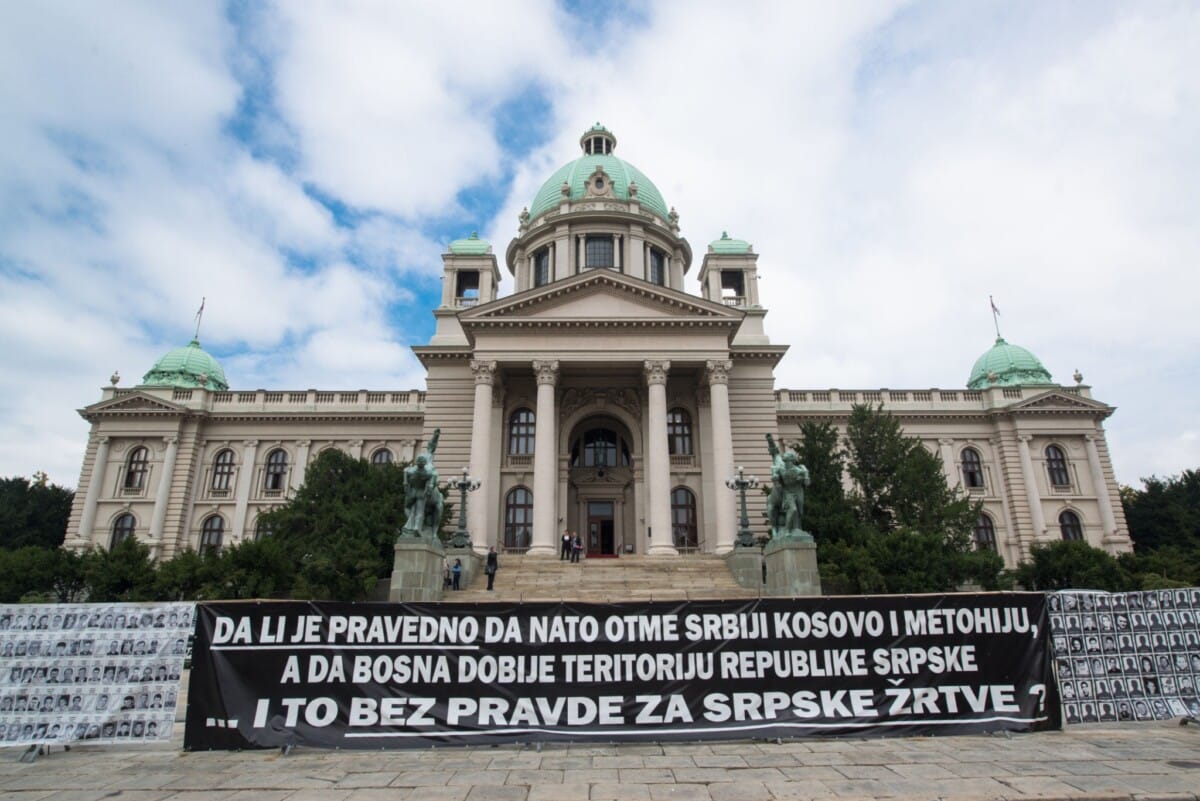
Hundreds of supporters gathered outside the parliament building in Belgrade to cheer incoming deputies as the new legislative convocation took its oath of office. The session marked a generational and institutional turning point for the Western Balkan nation, transferring legislative control from a long-entrenched ruling bloc to a civic-backed coalition of academics, physicians, teachers, and professionals.
Electoral Mandate and Seat Distribution
The October 25 vote drew a voter turnout of nearly 69 percent—an increase of roughly ten percentage points over the previous 2023 election. Running under the banner Student List – Students Are Winning, the movement captured 53.69 percent of the national vote.
While early post-election tallies cited 104 seats for the outgoing ruling bloc, official certification by Serbia’s Republic Electoral Commission (RIK) finalized the distribution at 140 seats for the Student List, 103 seats for the SNS-led Aleksandar Vučić – United Serbia coalition, and seven seats for national minority lists.
| Electoral List / Bloc | Vote Share (%) | Seats Won | Change vs. 2023 |
| Student List – Students Are Winning | 53.69% | 140 | +140 (New) |
| Aleksandar Vučić – United Serbia (SNS-led) | 39.48% | 103 | −26 |
| National Minority Lists (5 lists combined) | 2.45% | 7 | −5 |
| Total National Assembly Seats | — | 250 | 126 for Majority |
(Source: Republic Electoral Commission of Serbia / CRTA)

Read Also: French PM François Bayrou to Face Confidence Vote on September 8 Amid Budget Crisis
Leadership Election and Constitutional Transition
Following three days of constitutive proceedings, the Assembly elected university lecturer and Vinča Institute researcher Aleksandar Čupić as Speaker of the National Assembly on November 19. Čupić received 140 votes from the 239 deputies present, defeating SNS nominee Stojan Radenović, who garnered 97 votes before most opposition SNS deputies walked out of the chamber.
“I invite you to do everything in our power to restore the dignity of this legislative house through legal means, while ensuring we respect the dignity of every MP.”
— Aleksandar Čupić, Speaker of the National Assembly of Serbia
Under Serbia’s constitutional framework, Čupić’s election carries immediate executive weight. Following the resignation of President Aleksandar Vučić in September 2026, the Speaker of the National Assembly automatically assumes the role of Acting President of the Republic until a new presidential election is called and concluded.
READ Also: Lithuanian parliament elects Inga Ruginienė as the new Prime Minister (Read Official Statement)

Legislative Priorities: Anti-Corruption and Institutional Overhaul
Emerging out of nationwide anti-corruption protests that began in late 2024 and escalated through 2025, the Student List campaigned on an 11-point structural reform platform rather than traditional partisan ideology. Key legislative priorities expected in the assembly’s initial 90-day government-formation window include:
Judicial and Prosecutorial Independence: Establishing a vetted Special Prosecutorial Police unit insulated from political interference.
Asset Lustration and Accountability: Enforcing strict audits on the origin of public officials’ wealth and recovering misappropriated state funds.
Procurement Transparency: Requiring public disclosure of all state infrastructure contracts and repealing lex specialis exemptions.
Public Media Reform: Depoliticizing the Regulatory Authority for Electronic Media (REM) and restoring editorial independence at public broadcaster RTS.
Merit-Based Public Administration: Ending party-affiliated appointments in state-owned enterprises.

Regional and European Implications
The transition in Belgrade is being closely watched in Brussels and across Southeast Europe. Although the Student List avoided framing its campaign explicitly around European Union accession—and maintained Serbia’s established position against imposing sanctions on Russia—European policy analysts note that its core rule-of-law agenda aligns directly with the EU’s fundamental accession chapters.
With the Assembly now constituted and six Deputy Speakers elected from the Student List ranks, lawmakers face a constitutional deadline of February 15, 2027, to confirm a new cabinet and prime minister. Meanwhile, student plenums in Belgrade have issued open reminders to the incoming parliamentary majority that public trust hinges on rapid, transparent institutional delivery.